



At 4A Consulting, we’re excited to share an incredible milestone in our journey. Recently, we were featured as one of the top 8(a) small businesses driving transformative change at the Internal Revenue Service (IRS). This recognition by Orange Slices is a significant testament to the hard work and dedication of our talented team, and our ongoing commitment to delivering impactful solutions for federal agencies.
Scared of vibe designing? Here's what nobody told you.
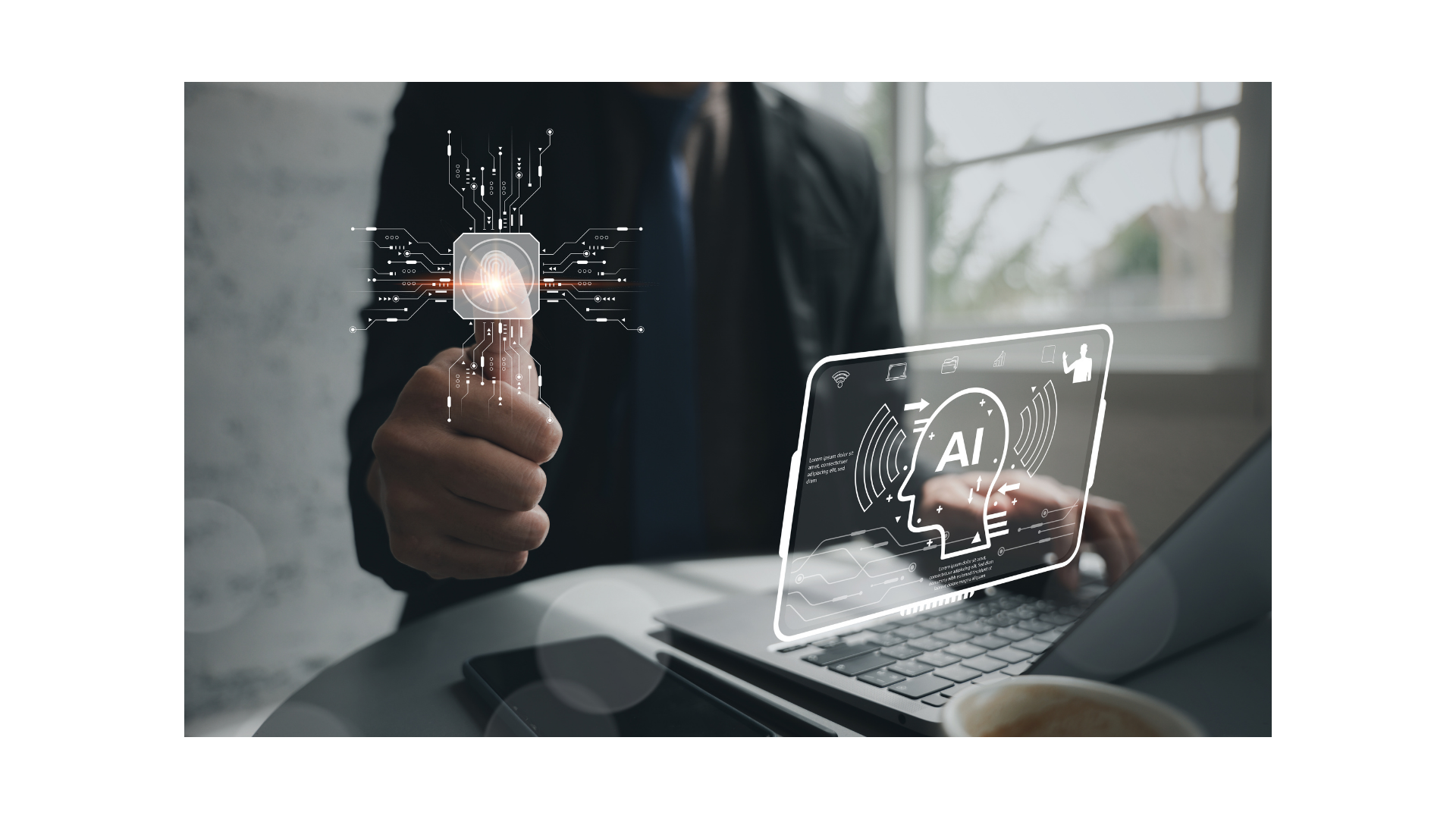
AI has taken the mechanical parts of design off the table. What remains? The human parts. It’s where the most valuable work has always lived. At 4A, this is how we think about what comes next.
For years, design in enterprise and government delivery was treated like the last mile of a project. The thing that happened after the real decisions had already been made. Teams were handed requirements, told to “make it usable,” and measured on whether the screens matched the spec.
That model is breaking. And the organizations that recognize it first are already pulling ahead.
AI has automated the mechanical layer of design, the repetitive tasks, the component assembly, the pattern matching that once consumed entire sprints. If a design function was built around those activities alone, the disruption is real. But here is the more important truth: what AI cannot replicate is exactly what makes design most valuable to an organization.
The ability to read a room. To translate friction into insight. To ask the uncomfortable question underneath the obvious one. To make a product feel trustworthy, not just functional.
At 4A, we call this the shift to Vibe Design. Moving from the mechanical era of UX to a more intentional, human-centered model of delivery. It is not a trend. It is a structural change in how organizations need to think about design capability.
Here are five principles shaping how we approach it.
The organisations getting the most value from AI-enabled delivery are not the ones using it to generate outputs faster. They are the ones using it to pressure-test thinking earlier.
There is a meaningful difference. Faster outputs without better decisions just accelerates the wrong direction. AI used as a mirror, to stress-test assumptions, surface edge cases, and challenge logic before it gets built is where the real efficiency gain lives.
AI is only as reliable as the judgment applied to it. Without human oversight, it produces outputs that look confident and can be completely wrong. Self-awareness is the quality filter the tool does not have.
In our AI-enabled delivery work, we embed human review checkpoints at every stage of AI-assisted design, not as a formality, but as a core part of the process. The designers who thrive in this model are the ones who treat AI output as a first draft, not a final answer.
In our AI-enabled delivery work, we embed human review checkpoints at every stage of AI-assisted design, not as a formality, but as a core part of the process. The designers who thrive in this model are the ones who treat AI output as a first draft, not a final answer.
Business impact:
Reduced rework costs. Faster identification of flawed assumptions before they reach development. Higher quality outputs without proportional increases in headcount.
Risk to watch:
Over-reliance on AI output erodes critical thinking over time. Organisations need design cultures that treat AI as crew, not captain, or the quality ceiling quietly drops without anyone noticing.
In high-stakes delivery environments, federal agencies, enterprise platforms, large-scale digital transformation, design feedback cycles are compressed, and the cost of defensiveness is high.
A team that treats critique as a personal attack slows down. A team that treats it as useful data accelerates.
The shift is cultural as much as individual. Organizations that build feedback-rich design environments, where iteration is expected and no version is precious, consistently outperform those that don’t. Not because they have better designers. Because their designers are able to move.
When a stakeholder critiques a design, it is not a verdict on the work. It is a signal about the gap between the intended experience and the received one. That gap is information. Treat it accordingly.
4A IN PRACTICE
We structure design reviews to separate observation from judgment. “What did you notice?” before “what do you think?” This small shift improves feedback quality and reduces defensive friction.
Business impact:
Faster iteration cycles. Lower emotional overhead. Continuous improvement instead of stagnation.
Risk to watch:
Detaching from ego does not mean abandoning standards. The goal is to stay open to feedback while still advocating for strong design decisions.
AI can generate layouts, copy, flows, and prototypes at scale. What it cannot do is walk into a room and explain why one design builds trust while another erodes it.
That requires a designer who can bridge two worlds: systems, and behavior. The ability to translate between them, clearly and credibly, is now one of the most valuable capabilities in design.
One product feels like a trusted colleague. Another feels like a government form. The logic may be similar but experience is not.
4A IN PRACTICE
We train teams to articulate the human rationale behind every major decision, not just the functional one.
Example: “We chose this interaction pattern because users at this stage are under time pressure and need certainty, not efficiency.”
That level of clarity improves both design quality and stakeholder alignment.
Business impact:
Faster decision-making. Stronger stakeholder alignment. Clearer justification for design investment
Risk to watch:
Storytelling without evidence becomes opinion. Pair narrative with insight, behavior, or measurable outcomes.
AI-enabled design introduces a subtle risk
: optimizing for output volume. More screens, faster.. When individual screens can be generated quickly, the temptation is to optimize for output volume. More screens, faster. More iterations, sooner.
But the most consequential design work, especially in government and enterprise systems is not about individual screens. It is about the system : trust, behavior patterns, and the user’s mental model across interactions.
Those systems are invisible at the screen level. They only emerge when you zoom out.
AI can generate interface. It cannot question whether the interface should exist in this form at all. That question, the one underneath the brief is where meaningul design begins.
4A IN PRACTICE
On a recent digital transformation engagement, a high drop-off form issue. The surface fix was simplification. The root issue was trust, users didn’t feel confident submitting their data. The solution wasn’t UI optimization. It was introducing trust signals earlier in the journey
Business impact: Higher adoption reduces support burden. More resilient outcomes.
Risk to watch:
Systems thinking without execution discipline slows delivery. The goal is to zoom out strategically, then execute decisively.
Design has historically struggled to make its value measurable. Terms like “intuitive” and “seamless” matter, but they are not enough in environments where every investment is scrutinized.
Design earns influence when it translates experience into outcomes.
We used to talk about Time– to– Task. Now metrics like Trust Velocity matter. How quickly a user moves from uncertain to confident.
4A IN PRACTICE
We define outcome metrics during the design phase, not after delivery:
- What does success look like at 30 days?
- What signals indicate trust?
- How will adoption be measured?
Designing with these questions upfront changes both decisions and results.
Business impact:
Stronger ROI narrative, Better prioritization, Faster executive alignment.
Risk to watch:
Metrics without context mislead. Always pair numbers with user behavior and intent.
What this shift means going forward.
The organizations that will lead are not those with the most AI capability. They are the ones that understand what AI cannot replace, and have invested in it.
Self-awareness. Emotional intelligence. Storytelling. Systems thinking. Outcome fluency.
These are not soft skills. They are the differentiators.
At 4A, this is not a theoretical . It is how we structure our teams, deliver work, and build capability. The shift from execution to intentional design is already underway.
The question is whether your organization is building for it.
“You were never just building screens. You were shaping how people experience systems. AI simply made that more visible.”
Work with 4A on your next design challenge
Whether you’re navigating AI integration, scaling a design practice, or rethinking how your digital products build trust, we’d like to talk.
Our teams work across UX, systems thinking, and AI-enabled delivery to help organizations build things that actually work for the people using them.
Connect with 4A → Explore our capabilities → Start a conversation